Where Legends Live On: Ram Mandir and the Eternal Spirit of Janakpur
- Adarsh Jhunjhunwala
- Oct 21
- 3 min read

Ram Mandir, Janakpur


Historical & Spiritual Significance
Nestled in the heart of the ancient Mithila region, Ram Mandir in Janakpur stands as a quiet yet deeply meaningful sanctuary of devotion. According to sources, the temple was originally constructed in the 17th century (by Chaturbhuj Giri) and later rebuilt around 1782 by the Gorkhali general Amar Singh Thapa. (Wikipedia)
The temple’s pagoda-style architecture distinguishes it from the Mughal-style buildings more common in Janakpur, and it directly overlooks the sacred pond of Dhanush Sagar—situating it within a spiritual landscape steeped in the legends of Lord Rama and Goddess Sita. (trade.ntb.gov.np)
Festivals such as Ram Navami (celebrating the birth of Lord Rama) and Vivaha Panchami (commemorating the marriage of Rama and Sita) are celebrated here with special bhajans, processions and rituals. (JanakpurHub)
Inside the temple complex is also the sacred shrine of Rajdevi Mandir—recognised as the Kuldevi (family goddess) of King Janaka of Mithila, and a Shaktipeetha for the region. (Wikipedia)
Although not confirmed by the sources local lore holds that one of the idols here is regarded as particularly powerful—some say similar to the one at Rameshwaram Temple in India—thus considered equivalent in value for worship. Tourism Aspects
For the traveller with an eye for spirituality, architecture and calm reflection, Ram Mandir offers a compelling experience:
A short walk (5–10 minutes) from the central temple of Janakpur makes this a spontaneous stop without logistics stress.
Its pagoda style, tranquil pond-view setting and simple elegance make it a wonderful spot for meditation, photography or slow sightseeing.
The temple is ideal for layering into a full day of temple-hopping in Janakpur—visiting Janaki Mandir, the local ponds, Rajdevi Mandir—all within a compact radius.
During major festivals (Ram Navami, Vivaha Panchami) the temple pulses with devotion, colour, chanting, and local energy which offers a much richer experience for the pilgrim or the curious traveller.
Location & Practicalities
Where: Southeast of Janaki Mandir, on the bank of Dhanush Sagar pond, in Janakpur (Dhanusha District, Madhesh Province, Nepal). (Wikipedia)
Visiting Hours: Daily from approximately 5:00 AM to 9:00 PM (check local announcements on festival days).
Cost: Entry is free. If you wish to participate in any ritual, a modest offering (~USD $0.50) is standard.
From Hotel Welcome, Janakpur: Just 5–10 minutes on foot—ideal for an early morning visit before breakfast, or a spontaneous stop any time during the day.
A Note on Rajdevi Mandir & Its Cultural Significance

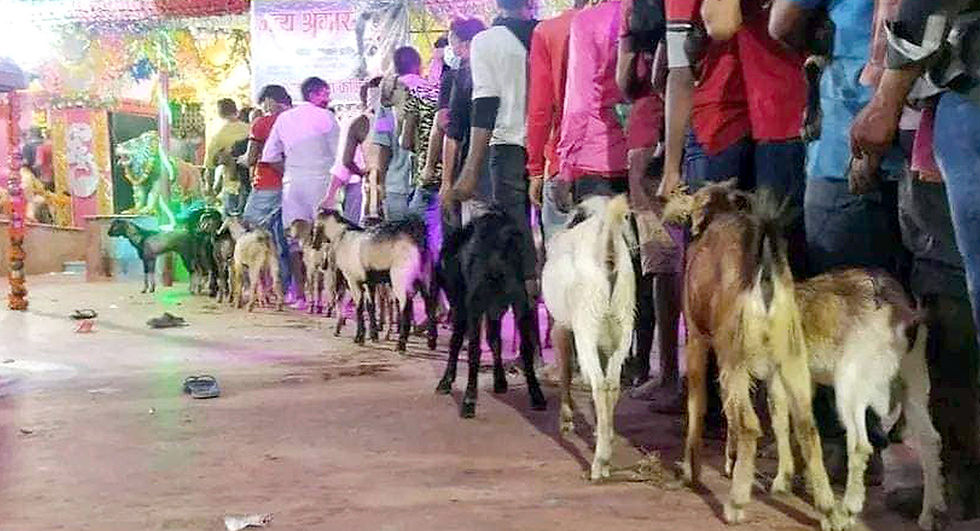
Because the Rajdevi shrine is part of the Ram Mandir complex, it’s worth sharing its story. Rajdevi is the family goddess of the ancient Mithila kingdom (ruled by King Janaka) and considered a Shaktipeetha—a place where the goddess’s power is felt strongly. (Wikipedia)
During the national festival of Dashain, Rajdevi Mandir is decorated lavishly with lights and flowers and becomes a focal point for devotees. On the 8th and 9th days of Dashain (Ashtami and Navami) thousands of goats have been historically offered in sacrifice here—a ritual that still draws large numbers of devotees from both Nepal and India. (The Federal)
For a visitor, this means that if you travel to Janakpur around Dashain (usually September/October), you’ll witness not only the finesse of ritual but also the cultural depth of Mithila devotion. It also reveals how local spirituality intertwines with national festivals in Nepal.
Why This Location Works for Your Stay at Hotel Welcome
Since Ram Mandir is so close, guests staying at your hotel can easily fit it in:
Ideal timing: Visit early morning just after sunrise when the temple is less crowded and the pond light is soft—then return for breakfast at the hotel.
Spontaneity: Its proximity means guests need not plan transportation; a quick stroll is enough.
Reflection space: After visiting the temple, guests can spend time in the hotel lounge, rooftop or garden digesting their experience in a quiet setting.
Festival bonus: If the visit coincides with Ram Navami or Vivaha Panchami, your hotel can suggest a full day of activity: temple, local market, evening aarti.
Cost-effective & meaningful: Free entry means guests can devote more budget to experiences (guide, local snacks) rather than logistics—perfect for mindful travellers.


Comments