Colors of Devotion: Exploring Mithila Art and the Spirit of Janakpur
- Adarsh Jhunjhunwala
- Oct 21
- 3 min read

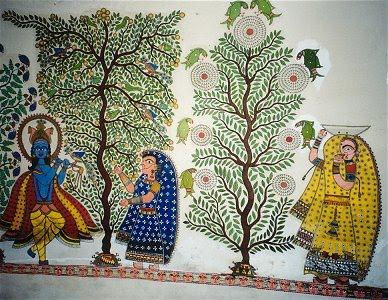

Step into a world where faith meets creativity, where every stroke of color tells a story passed down through centuries. Welcome to Mithila Art, the living canvas of the ancient Kingdom of Mithila—a region celebrated not just for its mythology but also for its soul-stirring artistry. From the walls of Janakpur’s temples to the vibrant courtyards of rural homes, this art form continues to pulse with divine energy and feminine grace.
🎨 Historical and Spiritual Significance
Rooted in the time of King Janak, father of Goddess Sita, Mithila Art—also known as Madhubani painting—was born from devotion and storytelling. Women of the Mithila region traditionally painted their homes’ mud walls to depict moments from the Ramayana, local festivals, and rituals of prosperity.
In the 1960s, after a devastating famine struck northern Bihar and parts of Nepal, this art form was revived as a livelihood source. Women began transferring their paintings from walls to paper, cloth, and canvas. What began as sacred expression became a symbol of empowerment, allowing rural women to transform their devotion into sustainable artistry that carried their culture across borders.
Every painting reflects spirituality—whether it’s Lord Ram and Sita’s wedding, celestial motifs like the sun and moon, or the sacred peepal tree symbolizing growth and endurance. To experience Mithila Art is to witness the continuity of divine heritage in color and form.
🌿 Uniqueness of Mithila Art
One of Mithila Art’s most enchanting aspects is its use of natural colors. Artists craft pigments from plants, minerals, and locally available materials—turmeric for yellow, indigo for blue, rice paste for white, soot for black, and crushed flowers for pinks and reds. Brushes are often made from bamboo twigs or cotton wrapped around sticks, giving each line a distinct, organic texture.
The precision of linework, symmetry of patterns, and storytelling layers make Mithila Art not just visual beauty but a meditative expression of faith and balance.
💪 Janakpur Women’s Development Center: Empowering Artisans
Located along Parshuram Marg, near Janakpur’s temple cluster, the Janakpur Women’s Development Center (JWDC) stands as a beacon of empowerment. Here, hundreds of local and rural women continue the age-old practice of Mithila painting while learning new design and business skills.
Visitors can observe artists at work, join a painting workshop, or purchase authentic handmade crafts—each one carrying a story of resilience, tradition, and devotion. The center not only preserves Mithila’s cultural identity but also provides women economic independence, dignity, and pride in their craft.
Every artwork sold supports their community, ensuring that art remains a bridge between spirituality and sustainability.
🏨 A Glimpse Inside Hotel Welcome
Guests at Hotel Welcome, Janakpur, are greeted by the soul of Mithila from the moment they step in. The hotel proudly showcases exquisite pieces of traditional Mithila Art throughout its lobby and rooms—each painting handpicked from local artisans and the Janakpur Women’s Development Center.
These artworks don’t just decorate the walls—they narrate the stories of Ramayana, devotion, and womanhood, reflecting Janakpur’s identity as both a spiritual and cultural capital. For travelers, it’s a way to stay surrounded by local heritage, blending comfort with culture.
🚶♀️ Tourism and Accessibility
Exploring Mithila Art centers is easy and rewarding:
Location: Around 10–15 minutes’ walk or a short rickshaw ride from Hotel Welcome, making it an ideal afternoon visit after exploring Janaki Mandir or Ram Mandir.
Experience: Watch artists create, try your hand in a guided workshop, or pick up souvenirs that carry centuries of storytelling.
Timing: Open daily during working hours (approx. 9 AM – 5 PM).
✨ Why It Matters
Mithila Art isn’t just art—it’s a living prayer in color and line, an eternal dialogue between devotion and design. Visiting these centers connects you not only to Janakpur’s cultural heart but also to the strength of its women, who keep tradition alive through their hands, hearts, and hues.
So, during your stay at Hotel Welcome, take a short stroll or rickshaw ride to experience Mithila’s timeless beauty—a creative pause between your spiritual journeys. You’ll return not just with souvenirs, but with stories painted in color, faith, and love.


Comments